Teaching Environmental Conservation: The Houbara Model
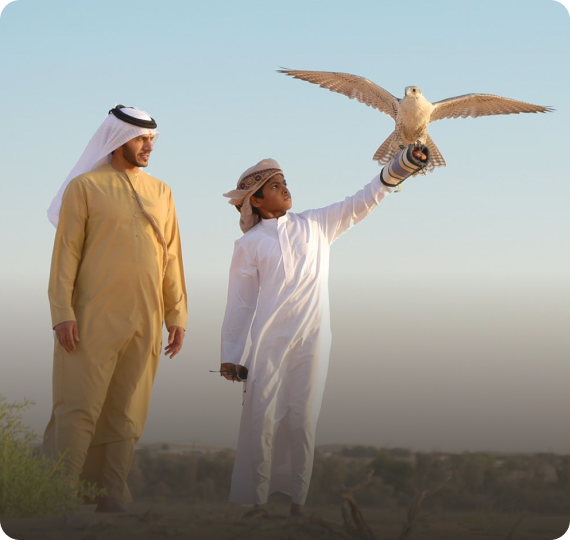
The Houbara Bustard occupies a special place in the history of Arabian falconry and is described as the “beloved quarry of falconers.” For centuries, it has been closely associated with Megnas, becoming a symbol of the balanced relationship between the falconer and his desert environment. From this historic connection emerged an early awareness of the importance of conserving prey and ensuring their long-term sustainability as an essential part of the natural cycle of life in the desert.
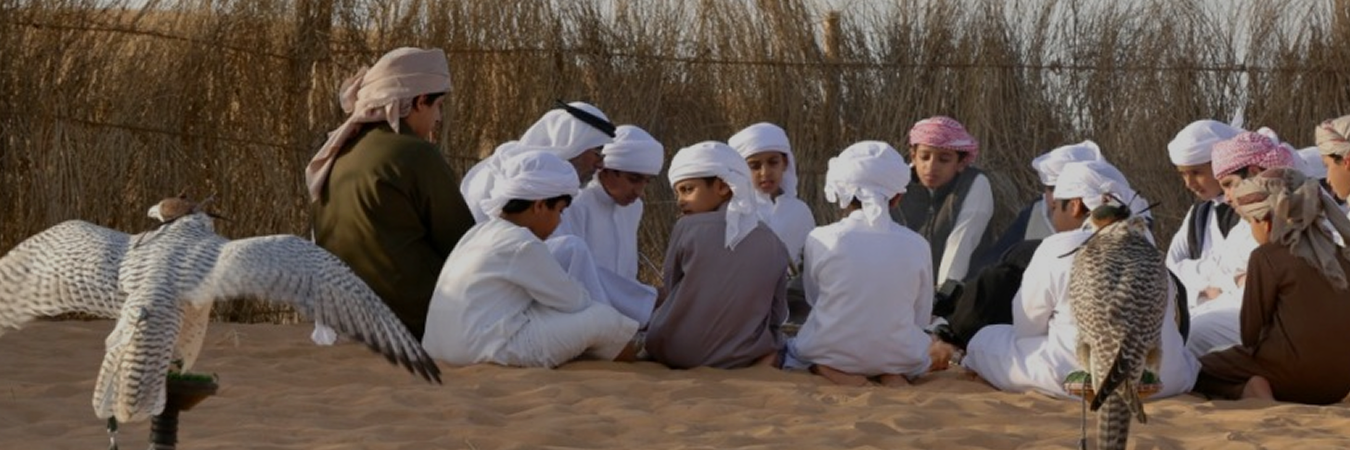
The Mohamed Bin Zayed Falconry and Desert Physiognomy School is committed to instilling this principle in its students by introducing them to the environmental and heritage role of the Houbara, as well as the extensive efforts undertaken by the United Arab Emirates to conserve, breed, and reintroduce the species into its natural habitat. It also familiarises them with the principles of sustainable hunting and the ethics of Arabian falconry.
While the conservation of falcons represents one of the fundamental pillars for sustaining falconry, protecting the wild prey historically associated with this practice forms the other essential pillar of this balanced ecological equation.
In cooperation with the International Fund for Houbara Conservation (IFHC), the Emirates Falconers’ Club has supported efforts to promote the use of captive-bred Houbara in falconry both within the UAE and abroad, thereby helping to reduce the pressure that wild populations may face and providing them with greater opportunities to reproduce and survive in their natural habitats.
In 2013, a programme for distributing captive-bred Houbara to falconers was launched in cooperation between the Club and the Fund. The programme was intended to encourage the adoption of sustainable practices and provide suitable alternatives for the practice of falconry in accordance with sound environmental principles. This is an approach that the Mohamed Bin Zayed Falconry and Desert Physiognomy School is committed to applying consistently in its training programmes.